| 1. Surplus was the Reason for Trade | |
| Reasons for Trade | (i) Surplus was the main reason for the peoples of the ancient world to trade. Also, in the former Soviet Union bloc. (ii) Before WWII (first century AD - 1945), comparative advantage was the reason for trade. (iii) Innovation played no role (i.e., no R&D). (Technical know-how was available, but input supplies were limited in Europe and Asia during the post-war period, 1945 - 75. Hence, production technologies, excepting military technologies, of trading countries were the same.) In a stationary economy, dissimilar factor endowments were the major reason for international trade (The Heckscher-Ohlin theory applies to trade in the modern world during the postwar period, 1960 - 2000). |
| Surplus | Those who settled down in river basins were successful in agriculture, and these surpluses were exported to neighboring regions in return for other goods. Surplus of a product simply means that its autarky price is lower in the exporting country than elsewhere. Beer was produced circa 3500 BC in Mesopotamia. |
| Sumerians |
|
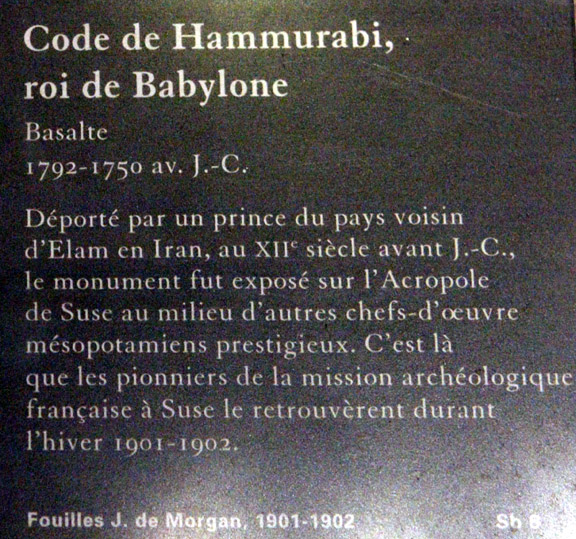
Babylon's trade
|
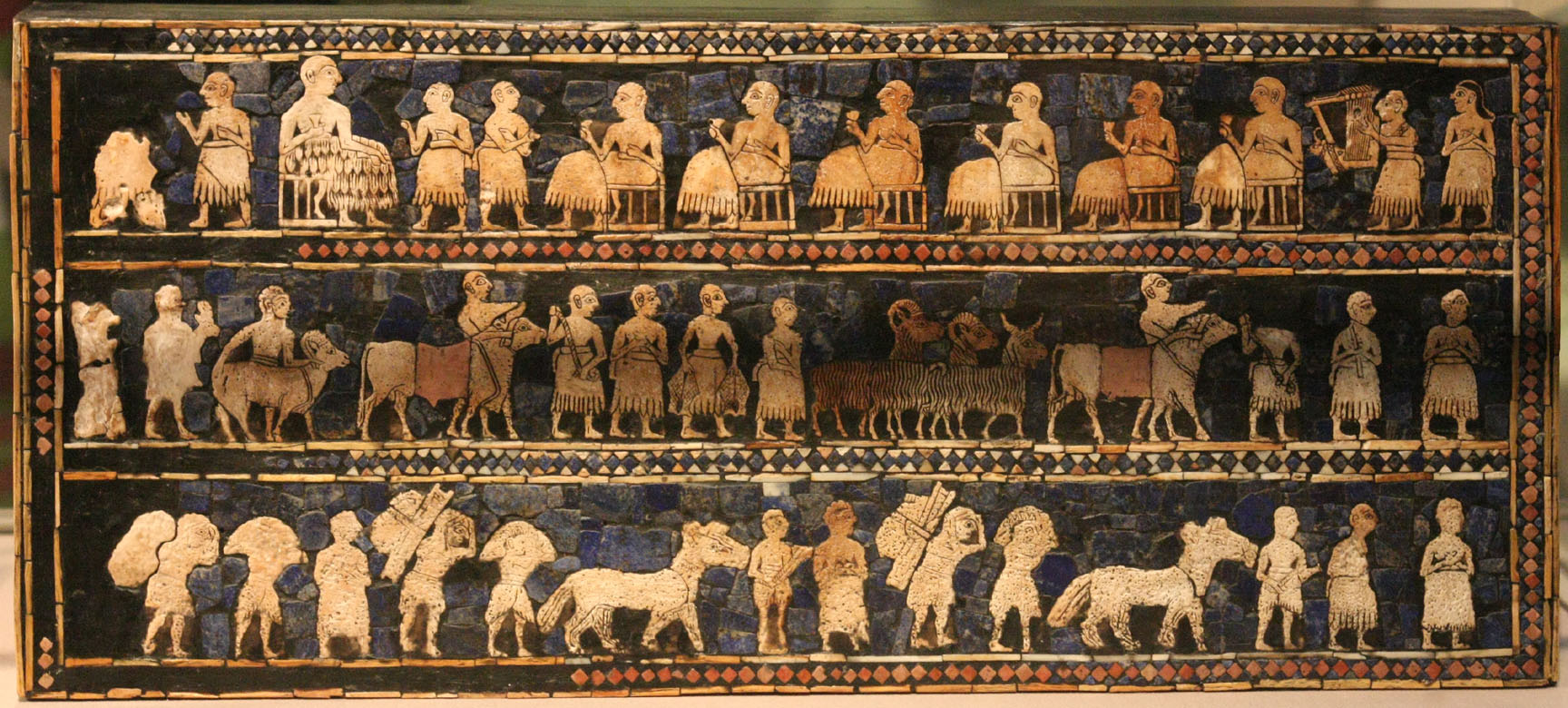
Sumerians were the first beer drinkers. They knew how to make beer and they had the raw materials. Sumerians traded with the people in the mountains. They needed wheat and barley, and they traded timber, copper and flax for wheat. (Barter trade) Silver and grains were used in payment. Even in modern times, the Communist bloc countries exported surpluses to other members and avoided trading with free market economies. Mesopotamia was conquered by Babylonians around 2300 BC, taking over their technologies when they left the region. Babylonians produced 20 different varieties of beer (Samuel Adams: 60 varieties), drinking beer with straws. Babylonians exported beer to faraway countries, even to Egypt. This Babylonian clay tablet is the first map of the world. Circles were used to denote city centers, and this method has been adopted by cartographers ever since. Babylonians were interested in geography because of their exports of beer and other agricultural surpluses.
Even before the silk road was built, Babylonia during the Kassite dynasty (1595-1157 BC) imported cobalt for coloring glasses from China (Donald McKenzie, Myths of Babylonia and Assyria, 1915). This Babylonia-China trade resulted in harmony of time counting. Both Babylonia and China (Shang dynasty) used the sexagesimal system. Spring and Autumn Annals used a sexagenary lunar calendar, dividing the day into 24 hours. This synchronicity may have been the result of trade between the two regions. |










 What if a country had no absolute advantage? Wouldn't it become a slave
economy to capital rich countries?
What if a country had no absolute advantage? Wouldn't it become a slave
economy to capital rich countries?
| 4. Theories against Free Trade after WWI | |
Self-Sufficiency |
Even earlier, Mahatma Gandhi led the salt march in 1930, breaking the salt law. It began with 80 Indians, but the number grew to 4000 when he reached the shore. That was the beginning of India's independence movement. He encouraged Indians to produce salt without paying taxes to the British government. This is reminiscent of the Boston Tea Party in 1773. Prior to 1991, on the whole, India was a closed economy, and the average tariff exceeded 200%. (Import substitution policy) Since the economic reform in 1991, India's economy improved mainly due to increased trade.
|
| Dependency Theory | This theory was proposed by Raul Prebisch in the 1950s. He claimed that developing countries become exploited and do not benefit from trade. Keep out imported goods until the infant industries become competitive. He proposed that poor countries adopt import substitution policy. LDCs usually export primary products, and the transition to manufacturing was difficult in LDCs. Socrates (470-399BC): Know thyself WWII would not have happened had the Allies followed "love thy neighbors policy." Germany was forced to sign the Versaille Treaty to pay 132 billion gold marks ($33 billion, but actual payment by 1932 was only about 1/6, $5 billion)" (The financial cost to the Allies (excluding Russia, and excluding human cost) was about $1 trillion in 1945." To survive in the modern world: CAs are not set in stone. Invest in R&D or learn from your neighbors (export promotion), export processed goods (raw materials + processing). The Latin American countries that adopted the import substitution policy (1950s-1980s) grew at a slower rate (2%) than those Asian countries that adopted export promotion policy (3.5%) during the postwar period. Import substitution is a move toward autarky. |
| the World Economy after 2020 (the Ricardian world again) | |
| Identical Technologies? | No. There are technological gaps between LDCs and Advanced Economies. Rich countries invest in R&D. Only High income economies (per capita GDP > $12,000) invest in R&D. One country is able to produce a high-tech good; the other country is not. (different technologies). USA has only two operating ice-brakers, and cannot patrol the arctic area. Imitation is costly, requiring highly educated labor force. Technological gaps between high-income countries and developing countries may not be reduced in the future. Agricultural products and manufactured goods < 20% GWP. Trade is determined by factor contents as in the Heckscher-Ohlin model, .) Trade in other goods is explained by the Ricardian model based on technological differences. |


| 5. Assumptions of The Ricardian Trade Model: 2 × 2 × 1 | |
Ricardo wrote Principles of Political Economy and Taxation in 1817. Most countries in Europe then were agricultural economies with some maufacturing. The Ricardo's model is useful in explaining trade patterns with different technologies (until 1980s). Karl Marx wrote Das Kapital in 1867. Trade based on comparative advantages. |
|
| 7 Assumptions |
|
| Ricardo's Model | 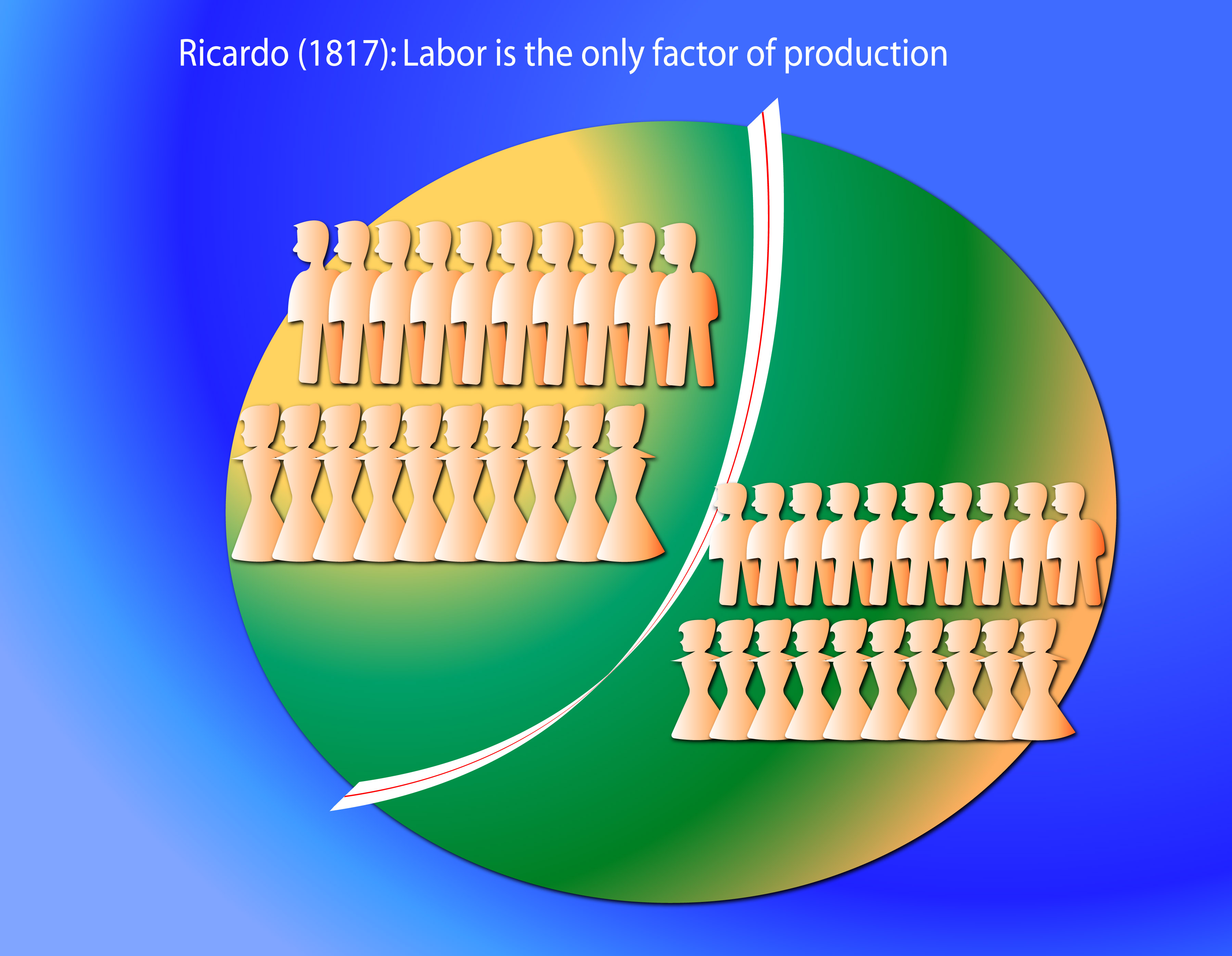 |
| Heckscher-Ohlin Model | The HO model is applicable to countries that have similar technologies but factor endowments are dissimilar. (since 1980s) |
| Input-output coefficients | aij = the amount of input i
required to produce 1 unit of good j = variable, and responsive to changes in factor prices in the Heckscher-Ohlin trade model. yi = the amount of good i produced in industry i aL1 = L1/y1 aK2 = K2/y2 |
| Production Possibility Frontier |
A PPF shows various maximum output combinations
the economy can possibly produce from given technology and resources, including
capital (K) and labor (L) inputs. Only one of these points will ultimately
be chosen. Labor Demand in Sector 1
L1 = aL1y1 For instance, assume that industry 1 produces automobiles. If it requires 2 auto workers (per year) to produce one automobile (aL1 = 2) and 10 million automobiles (y1 = 10 million) are produced per year, the total number of auto workers required is L1 = 2 × 10 million = 20 million. Similarly, L2 = aL2y2 L1 + L2 = L (Aggregate demand for labor = aggregate labor supply) aL1y1 + aL2y2 = L (Production Possibility Frontier)
|
 |
|
| 6. Absolute vs. Comparative Advantage | |
| Absolute Advantage | If aL1 < aL1*,
then the HC is said to have an AA in industry 1. HC = Home country, FC = Foreign country |
| Different productivities due to weather and other conditions | Ricardo: Labor productivities differ between countries
|
| Comparative Advantage | If aL1/aL2 < aL1*/aL2*,
then the HC is said to have a CA in industry 1 [The autarky (relative) price of good 1 in HC is less than that in FC]. |
| Note that aL1/aL2 = (p1/p2)A
is the relative price of good 1 in autarky. Remark: A country may have AAs in both commodities, but it cannot have CAs in both commodities. Similarly, a country may have AAs in many commodities, but it cannot have CAs in all commodities. |
|
| World outputs under two scenarios |
|
More outputs can be produced under free trade. Yet we need to prove that each country will be better off under free trade. The gap between autarky and free trade points above measures the gains from trade. How the gains are distributed between the two countries depends on the exchange rate. When trade is balanced, both countries benefit from trade. Currently, $1 = 6.5 yuan and the US has a huge bilateral trade deficit. If $1 = 4 yuan, US-China bilateral trade deficit would disappear, but China's GDP of 100 trillion yuan would change from $15 trillion to $25 trillion, much greater than US GDP. China would no longer enjoy the tariff benefit of Developing Countries. |
|